IT consultancy · Enschede, Netherlands

Smart systems, solidly built.

We design, build and run AI systems, data platforms and the applications on top of them. On your infrastructure, by the people you actually talk to. Solid means it still works on a Monday morning, and it still works without us.

Scroll

What we do

Four things, and how they fit together

Most of our work sits where these overlap: a model that needs an interface, an application that needs somewhere to run, a decision that needs evidence.

Data & AI engineering

Getting your data into a shape you can ask questions of, AI agents on top that look things up and take action, and a test set that tells you whether the whole thing works. We build for the day the model is wrong, not just for the demo where it is right.

Pythonpydantic-aiLLM agentsRAGMCPevalsdata pipelinesPostgreSQL

Custom software & web apps

From a small bookkeeping tool that wins back an afternoon a week, to a platform where practices keep patient records, each walled off from the next. One team owns it from the browser tab to the database backup, so nothing gets lost between suppliers.

TypeScriptSvelteKitReactFastAPIPostgreSQLmulti-tenantSSO
In production: VoetLink

Platform & infrastructure

Hosting in Europe, with the whole setup written down as code. Infrastructure we can rebuild from an empty server in an afternoon, with backups that have actually been restored at least once.

infrastructure-as-codeOpenTofupyinfraDockerCaddyGitHub ActionsHetzner

Technology strategy

Technology radars, architecture reviews, and an honest answer to where AI pays for itself and where a spreadsheet does the job. We only advise on things we have built ourselves.

Technology radarArchitecture reviewbuild-vs-buyAI readiness
In production: Nodus

Selected work

Built inside your team

Our engineers work inside your team, on your problem, with your data. We sit next to the people who do the job today, ship a first usable version within weeks, and keep shipping until it does the whole job. No requirements document that goes stale in a drawer. The three systems below were built that way, and all three are in production.

Open-source technology radar

Nodus

A technology radar for teams that have outgrown the spreadsheet called 'things to keep an eye on'. Which technologies to invest in, pilot, explore or just watch, with the reasoning behind every call. Log in with your company account, export straight into the management report. Open source and self-hosted, so what you know about the market stays in your own building.

In use at TenneT and Gasunie

PythonFastAPID3PostgreSQL
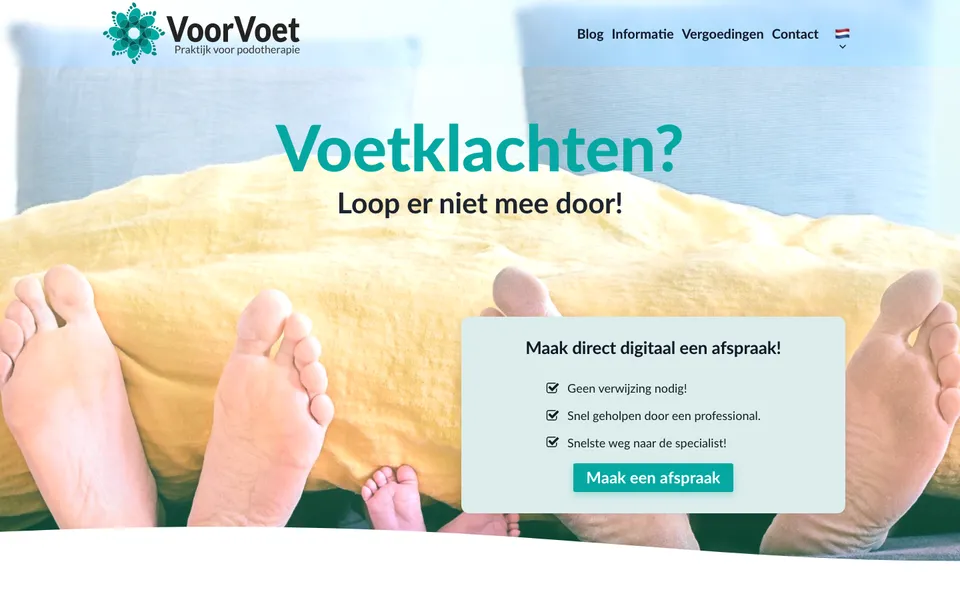
Bookkeeping integration for a healthcare practice

From patient file to ledger

Patient invoices from the electronic record system and card payments from the terminal land in e-Boekhouden without anyone re-typing them. What used to be an afternoon of copying every week is now a review of the result. Small on purpose: no new bookkeeping package, just the missing link between three systems the practice already had.

An afternoon a week, back

Pythone-Boekhouden API

Also shipped

Fast, accessible websites on European servers, designed, built and run end to end.

How we work

Four steps, and after each one you own more

AI work differs from ordinary software on one point: the model is sometimes wrong. Every step below is built around that.
  1. Pick the work

    Not “where could we use AI”, but which pile of work, which decision, which afternoon that comes back every week. We read your real cases first. If a plain script would do the job, we say so.

  2. Measure first

    Before a system exists: around twenty real cases, each with its right answer. From then on, progress is a number you check, not a demo you watch.

  3. Build

    Short cycles, running on your infrastructure from week one. When the system is unsure, it hands the case to a person. That is the design, not a bug. The test set runs on every change.

  4. Hand over

    Code, infrastructure setup, test set and documentation, all in your accounts. That test set is what lets you swap the model later without us. If we keep running it, that is your choice, not a dependency.

You hold

  • written plan from step 01
  • test set with answers from step 02
  • running system from step 03
  • the keys from step 04

Settled at the start

Solid starts in week one

Four things we settle in the first week, because after delivery they are expensive to retrofit.

You own everything

Code, data and infrastructure sit in your accounts and your repositories from the first week, not in ours. No lock-in, no licence that expires. Untangling this afterwards is a project of its own. At the start it is a checkbox.

How we work, step 4: the keys

Hosted in Europe

Where your data lives decides which law applies to it, and moving it later only gets more expensive. So we pick the region before the first deploy: servers in the EU, on our infrastructure or on yours, and that choice stays reversible.

All of our hosting is inside the EU

You talk to the builder

Nobody sits between the problem and the person fixing it. Whoever scopes the work also builds it, and is still the one you call a year later. Knowledge of your situation lives in a head you know, not in a chain of handovers.

Your message lands with an engineer

Open where it can be

Whatever is not your competitive advantage, we build on open source and give back. That is a decision for the first line of code. Opening up a closed system later means taking apart everything that has grown around it.

Nodus: open source at TenneT and Gasunie

Contact

Tell us what you are trying to build

A first conversation costs nothing and usually takes half an hour. We reply within one working day.

A few sentences is plenty. What exists today, and what should exist instead?